
As “superfake” luxury goods flood the market with materials and hardware nearly indistinguishable from the real deal, top-tier brands are scrambling to stay ahead, deploying new tools and technologies in the war against counterfeits.
More: The 10 Most Iconic Luxury Bag Brands – and Why They’re Basically Personality Types
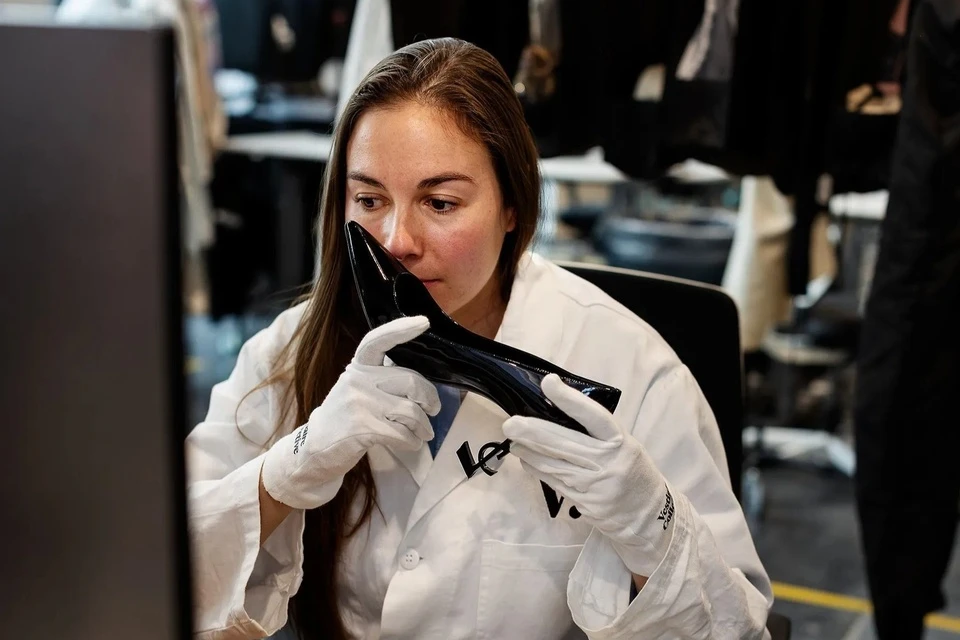
At the Vestiaire Collective authentication center in Tourcoing, France, a woman in a white lab coat and cotton gloves delicately places a $18,000 Hermès Birkin bag in Zanzibar blue on the table. Her name is Mélissa B., though her full name is withheld — like many of her colleagues — due to increasing headhunting threats from rival platforms.
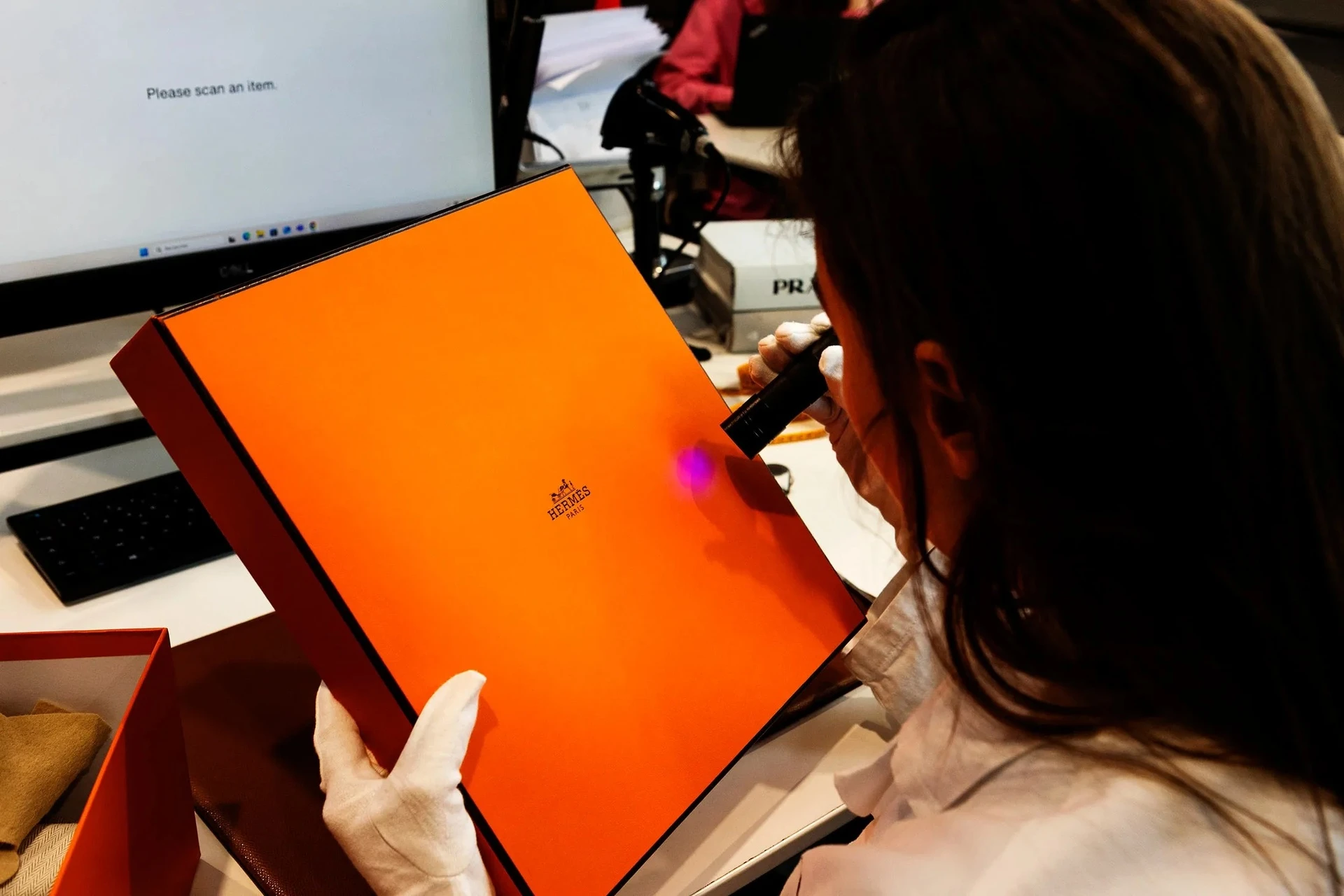
With trained eyes and a magnifying glass, Mélissa examines the bag’s palladium hardware. She checks the sharpness of the Hermès engraving, the stitching precision, and the distinctive H-shaped zipper pull. She then sniffs the leather — “slightly sweet,” she notes — and inspects the dust bag under a UV light. Finally, she reviews the invoice and certificate.
After 15 minutes of silent scrutiny, she nods: “Authentic.”
A Growing Second-Hand Market Means Higher Stakes
The luxury resale industry is booming. According to Bain & Company, global second-hand luxury sales are projected to hit $50 billion in 2024, growing faster than primary market sales. As platforms like Vestiaire Collective report 20% revenue growth and The RealReal hits $600 million in annual sales, the pressure to weed out fakes intensifies.
The stakes are even higher now with increasing U.S. import duties (some as high as 10%), pushing consumers further toward the pre-owned market.
But with growth comes a flood of highly convincing counterfeits. Vestiaire says that in 2021, fewer than a third of its rejected listings were suspected fakes. Today, that number has more than doubled. These “superfakes” — visually and materially near-identical to authentic items — make verification increasingly difficult.
According to the OECD, counterfeit goods account for a staggering $467 billion globally. The U.S. alone seized $4.2 billion worth of counterfeit luxury goods last year. And that’s just scratching the surface.
Luxury’s Evolving Relationship With Resale
Luxury giants such as Chanel, Hermès, and Louis Vuitton once resisted the resale wave, fearing it would dilute exclusivity. Yet today, their bags top sales charts on platforms like Vestiaire and The RealReal.
In a major shift, Vestiaire partnered with Alexander McQueen, Mulberry, and others in 2021, while luxury conglomerate Kering — owner of Gucci and Saint Laurent — acquired a 5% stake in the platform. “Second-hand luxury is no longer a trend. It’s a movement,” said Kering CEO François-Henri Pinault.
Still, a major challenge remains: there’s no universal authentication standard.
Platforms now opt for terms like “verified” rather than “authentic” to sidestep legal liability. StockX, under pressure from Nike lawsuits, rebranded its label from “Verified Authentic” to “StockX Verified.” The RealReal followed suit, replacing “100% authentic” with descriptions of their “authentication process.”
Training the Nose: The Science (and Art) of Verification
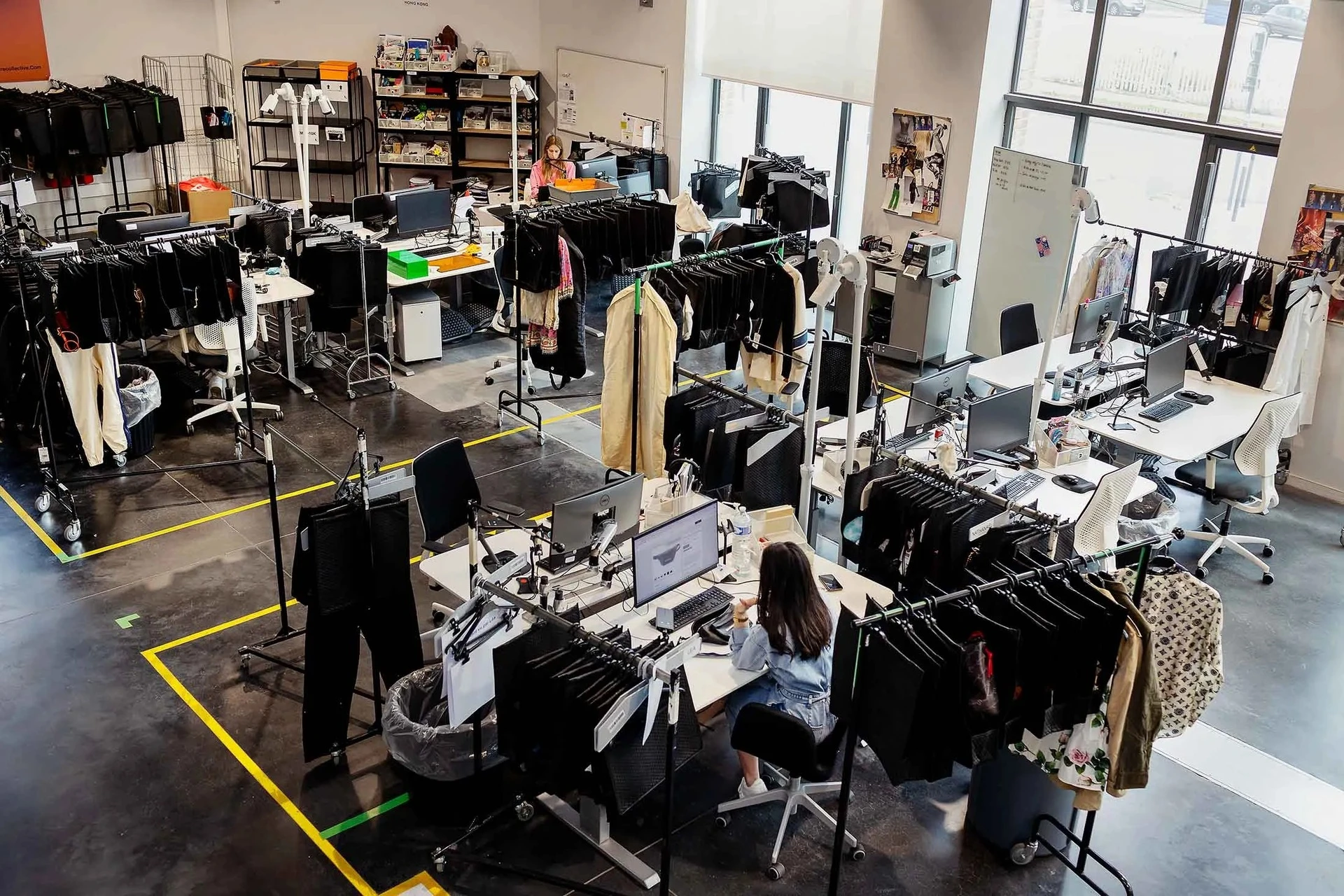
Vestiaire runs its own “authentication academy,” where trainees undergo 750 hours of training in materials, construction techniques, and forgery detection. Employees specialize by product category—shoes, bags, apparel, jewelry—after two months. Items are authenticated if priced above €1,000 or if buyers pay a €15 fee.
Even ultra-luxury pieces like a €45,000 Cartier watch or a €125,000 Hermès Himalaya bag pass through their hands. In total, the company now collaborates with 12 high-end brands for training and counterfeit data sharing, though the identities of these brands remain confidential.
To scale the effort, Vestiaire has incorporated artificial intelligence into its verification process since 2019, signaling a tech-forward future for the resale economy.
Blockchain, Chips, and the Future of Authenticity
The European Union is pushing for digital product passports for textiles, electronics, and furniture, aimed at increasing traceability. Chanel is replacing plastic authenticity cards with scannable microchips and holograms. The Aura Blockchain Consortium — founded by LVMH, Prada, Richemont, and OTB Group — issues unique digital IDs for luxury products.
Prada is using the system to certify the origin and ownership of its recycled gold jewelry. So far, Aura has issued over 50 million blockchain IDs for 50 luxury brands.
“We’re building a new layer of trust in luxury,” said Romain Carrere, Aura’s CEO.
But Do Consumers Really Care?
Despite these advancements, many consumers are surprisingly indifferent. Since December 2019, luxury prices have risen 54% on average, with some handbags doubling in price — fueling accusations of “greedflation.” Meanwhile, quality has reportedly slipped, with crooked stitching and dull metals sparking disillusionment.
As a result, the “dupe culture” has gone mainstream. A growing number of consumers, especially in the U.S., are intentionally buying fakes — not just cheap knockoffs, but sophisticated superfakes.
According to Business of Fashion, one-third of Americans admit to knowingly purchasing counterfeit luxury items.
“Fakes have become a meme,” said Emilia Petrarca, fashion editor at Shop Rat. “That $78 ‘Wirkin’ bag from Walmart sold out in hours.”
In an era where luxury is more accessible — and less sacred — the line between authentic and fake is not just blurry. It might be vanishing.